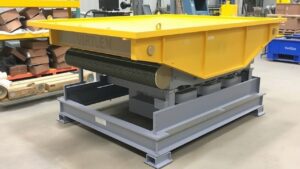
Vibrating screens have revolutionized industrial processes by significantly enhancing efficiency and productivity. These screens efficiently separate and classify materials, allowing for streamlined operations and reduced manual labor. By effectively screening materials, vibrating screens ensure that only the desired particles pass through, minimizing waste and maximizing output.
This increased efficiency has a direct impact on the overall productivity of industrial processes, leading to cost savings and improved throughput. Moreover, vibrating screens can handle large volumes of materials at high speeds, further contributing to enhanced efficiency. The ability to process bulk materials quickly and accurately makes vibrating screens indispensable in industries such as mining, construction, and agriculture.
As a result, these screens have become a cornerstone of modern industrial processes, driving substantial improvements in operational efficiency and overall productivity.
Key Takeaways
- Vibrating screens are improving industrial processes by increasing efficiency and productivity.
- They are enhancing material separation and sorting capabilities, leading to improved quality of output.
- Innovative vibrating screen designs and functionality are reducing maintenance and downtime.
- Advanced screening technology is allowing for precise particle sizing, improving product quality.
- The integration of vibrating screens in various industries is providing environmental and cost benefits.
Enhanced Material Separation and Sorting Capabilities
One of the key innovations brought about by vibrating screens is their ability to effectively separate and sort materials based on size, shape, and composition. This capability is particularly valuable in industries where precise material classification is crucial, such as in the mining and aggregate sectors. Vibrating screens utilize various mechanisms to separate materials, including mesh screens, perforated plates, and polyurethane panels, allowing for tailored separation based on specific requirements.
Furthermore, the high-frequency vibrations generated by these screens enable efficient segregation of materials, ensuring that each component is accurately classified. This enhanced material separation capability not only improves the quality of end products but also facilitates the recycling and reuse of materials, contributing to sustainable industrial practices. As a result, vibrating screens have become instrumental in optimizing material separation and sorting processes across a wide range of industries.
Improved Maintenance and Downtime Reduction
Innovative vibrating screen designs have led to significant improvements in maintenance practices and downtime reduction within industrial settings. Modern screens are engineered with robust components and advanced technologies that minimize wear and tear, thereby extending their operational lifespan. Additionally, the incorporation of self-cleaning mechanisms and modular designs simplifies maintenance tasks, reducing the frequency and duration of downtime for maintenance activities.
Moreover, the use of predictive maintenance techniques, such as vibration analysis and condition monitoring, allows for proactive identification of potential issues before they escalate into major problems. This proactive approach to maintenance not only enhances equipment reliability but also minimizes unplanned downtime, ensuring continuous operation of industrial processes. Consequently, the integration of innovative features in vibrating screens has resulted in improved maintenance practices and reduced downtime, bolstering overall operational efficiency.
Advanced Screening Technology for Precise Particle Sizing
| Technology | Advantages | Applications |
|---|---|---|
| Laser Diffraction | High precision, wide size range | Pharmaceuticals, powders, emulsions |
| Dynamic Light Scattering | Measurements in solution, rapid analysis | Proteins, nanoparticles, polymers |
| Electrical Sensing Zone | Accurate sizing, minimal sample preparation | Cell suspensions, microorganisms, nanoparticles |
Vibrating screens have evolved to incorporate advanced screening technologies that enable precise particle sizing across diverse industrial applications. These technologies include high-frequency vibrations, multi-deck configurations, and adjustable amplitude settings, allowing for fine-tuned control over particle size distribution. As a result, industries such as pharmaceuticals, food processing, and chemical manufacturing benefit from the ability to achieve accurate particle sizing for their specific production requirements.
Furthermore, the integration of advanced screening technology in vibrating screens facilitates the processing of a wide range of materials, from fine powders to coarse aggregates, with exceptional precision. This level of control over particle sizing not only ensures product consistency but also enables industries to meet stringent quality standards and regulatory requirements. Consequently, the adoption of advanced screening technology in vibrating screens has redefined particle sizing capabilities, empowering industries to achieve unparalleled levels of precision in their manufacturing processes.
Application of Vibrating Screens in Various Industries

The versatility of vibrating screens has led to their widespread application across diverse industries, where they play a pivotal role in optimizing various processes. In the mining and quarrying sector, vibrating screens are utilized for efficient material classification and sizing, enhancing the extraction of valuable minerals and aggregates. Similarly, in the construction industry, these screens are instrumental in separating construction materials such as sand, gravel, and recycled concrete for use in building projects.
Moreover, vibrating screens find extensive use in the agricultural sector for sorting grains, seeds, and fertilizers, ensuring product quality and uniformity. In the pharmaceutical and chemical industries, these screens facilitate precise particle sizing and material classification for the production of pharmaceutical powders and chemical compounds. Additionally, vibrating screens are integral to the recycling industry, where they aid in separating recyclable materials from waste streams, contributing to sustainable waste management practices.
Innovations in Vibrating Screen Design and Functionality
The continuous evolution of vibrating screen design and functionality has led to groundbreaking innovations that have redefined industrial screening processes. Manufacturers have introduced modular screen panels, advanced motion analysis systems, and customizable deck configurations to cater to diverse application requirements. These innovations enable industries to tailor vibrating screens to specific operational needs, enhancing their adaptability and performance across various settings.
Furthermore, advancements in screen design have led to the development of specialized screens for specific applications, such as dewatering screens for moisture removal and inclined screens for high-capacity screening. Additionally, the integration of smart technologies, such as remote monitoring and automation systems, has transformed the operational control and maintenance of vibrating screens. These innovations not only improve overall efficiency but also contribute to the seamless integration of vibrating screens into industrial processes.
Environmental and Cost Benefits of Vibrating Screen Integration
The integration of vibrating screens into industrial processes brings about significant environmental and cost benefits that resonate across multiple sectors. By efficiently separating materials and reducing waste generation, these screens contribute to sustainable resource utilization and environmental conservation. Moreover, the precise particle sizing capabilities of vibrating screens minimize material over-processing, leading to energy savings and reduced environmental impact.
Furthermore, the enhanced efficiency and productivity achieved through vibrating screen integration translate into cost savings for industries. Reduced manual labor requirements, optimized material utilization, and minimized downtime result in lower operational costs and improved profitability. Additionally, the longevity and reliability of modern vibrating screens contribute to long-term cost savings through decreased maintenance expenses and extended equipment lifespan.
In conclusion, the innovative ways in which vibrating screens are improving industrial processes encompass a wide spectrum of benefits that span efficiency, material separation capabilities, maintenance practices, screening technology advancements, diverse industry applications, design innovations, as well as environmental and cost advantages. The continued evolution of vibrating screen technology is poised to further enhance industrial operations across various sectors while driving sustainable and cost-effective practices.